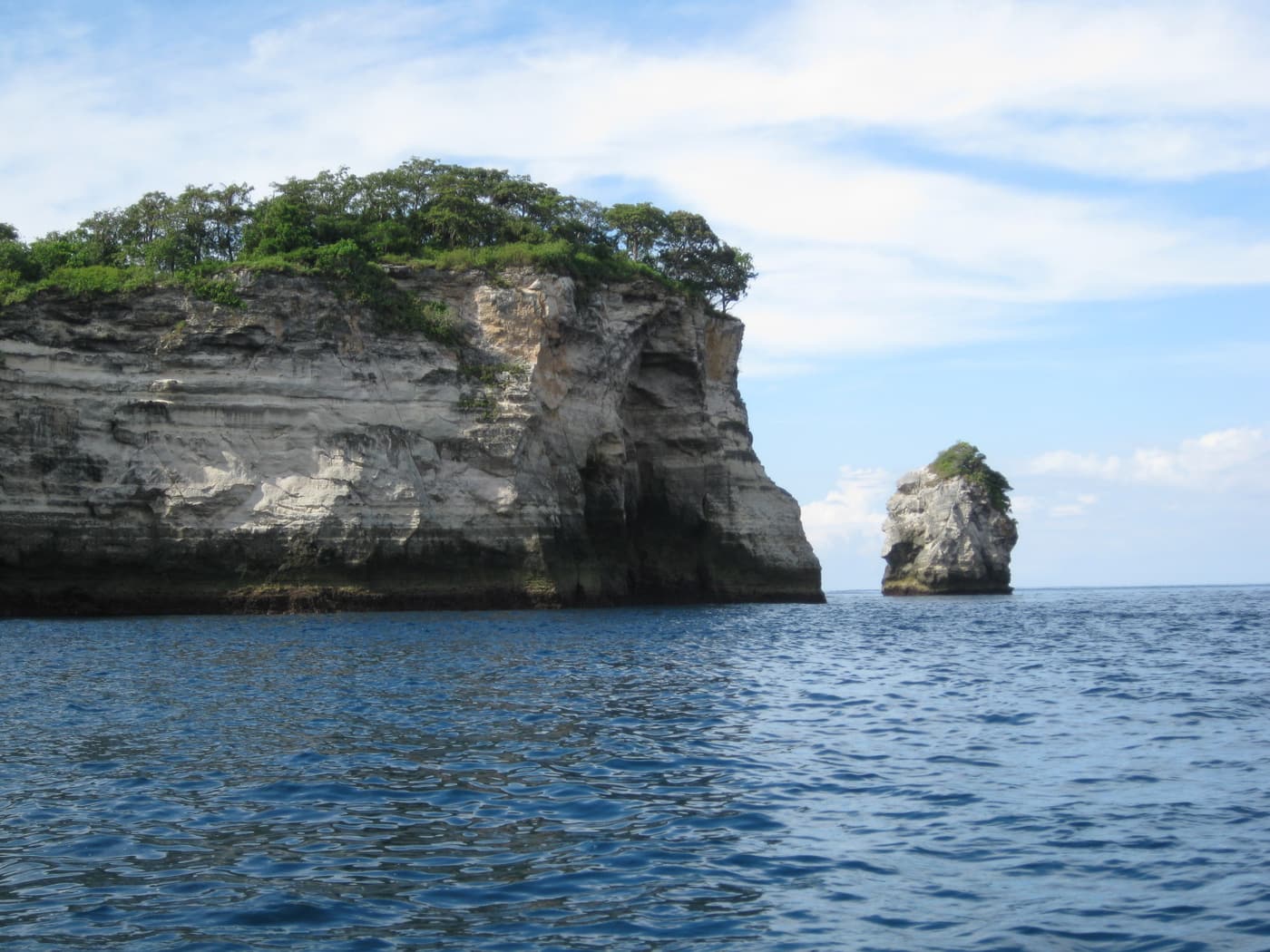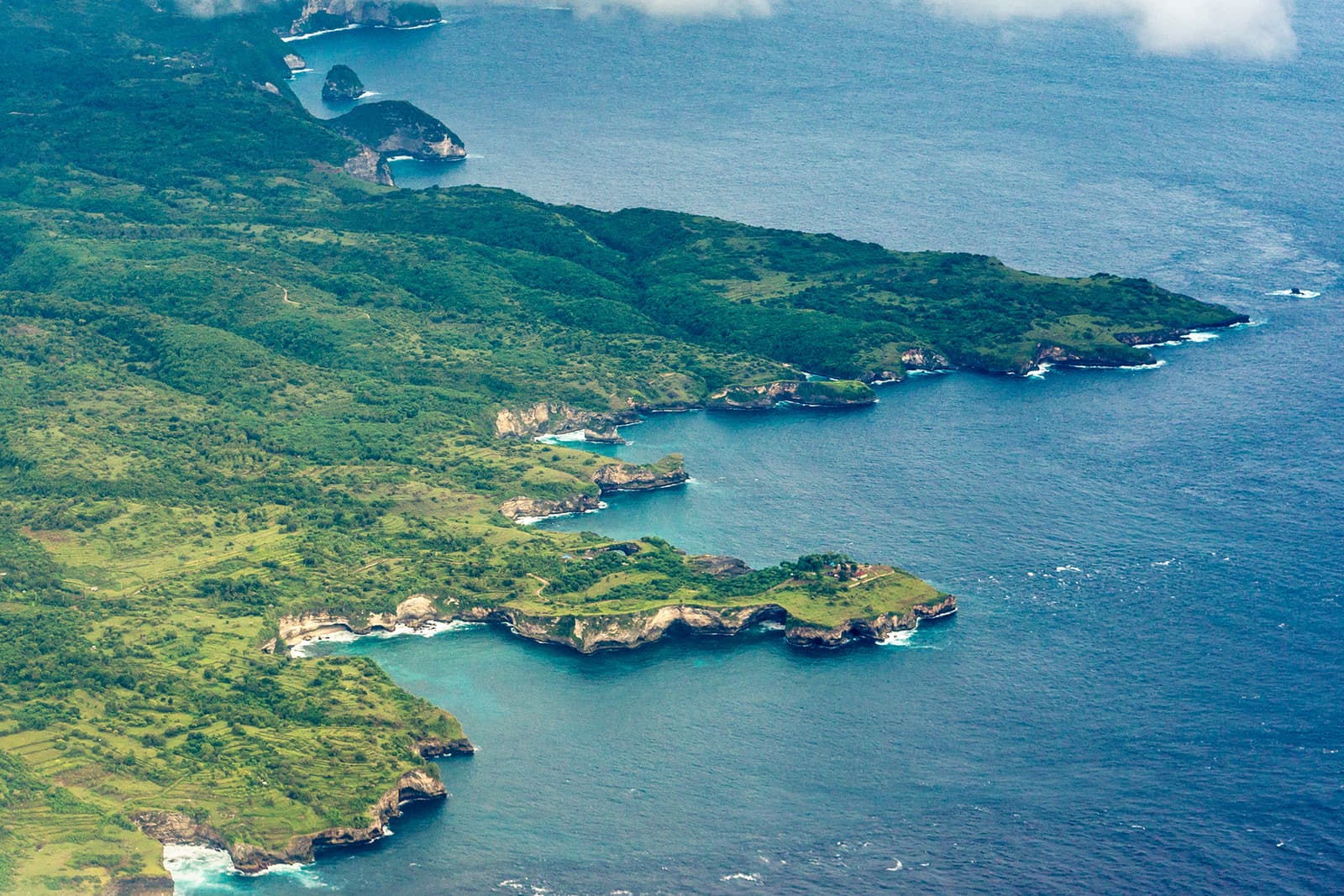
Nusa Penida lies across the Badung Strait from Bali, part of the regency of Klungkung together with its small neighbours Nusa Lembongan and Nusa Ceningan. It is the largest of the three, a limestone plateau of roughly 200 square kilometres that rises to around 500 metres in the hills of the interior, and falls in sheer cliffs to the sea along much of the south and west.
An island apart
For centuries Nusa Penida was a remote, dry and poor island, used by the Balinese kingdom of Klungkung as a place of exile. In Balinese belief it is the home of the powerful spirit Ratu Gede Mecaling, honoured at the temple of Pura Dalem Penataran Ped near Toyapakeh, which draws pilgrims from all over Bali. Life was built around farming the thin soil and, later, seaweed cultivation in the shallows of the north coast.
Tourism arrived late — first divers, drawn by manta rays and the currents of the strait, then, from the 2010s, the crowds who came to see Kelingking’s T-Rex headland on social media. Roads, guesthouses and viewpoints have multiplied since, but outside the famous stops the island is still rural, quiet and traditional.
Tours or independent?
Most visitors take a tour, and with good reason. The sights are spread out, the roads are slow and sometimes rough, and signposting is limited. A tour or a private driver solves the logistics and leaves you free to enjoy the views. Independent travel is possible — especially if you stay a few nights and hire a driver by the day — but scooters are only for experienced riders. Compare the options in West vs East.
The highlights at a glance
 West coast
Kelingking Beach
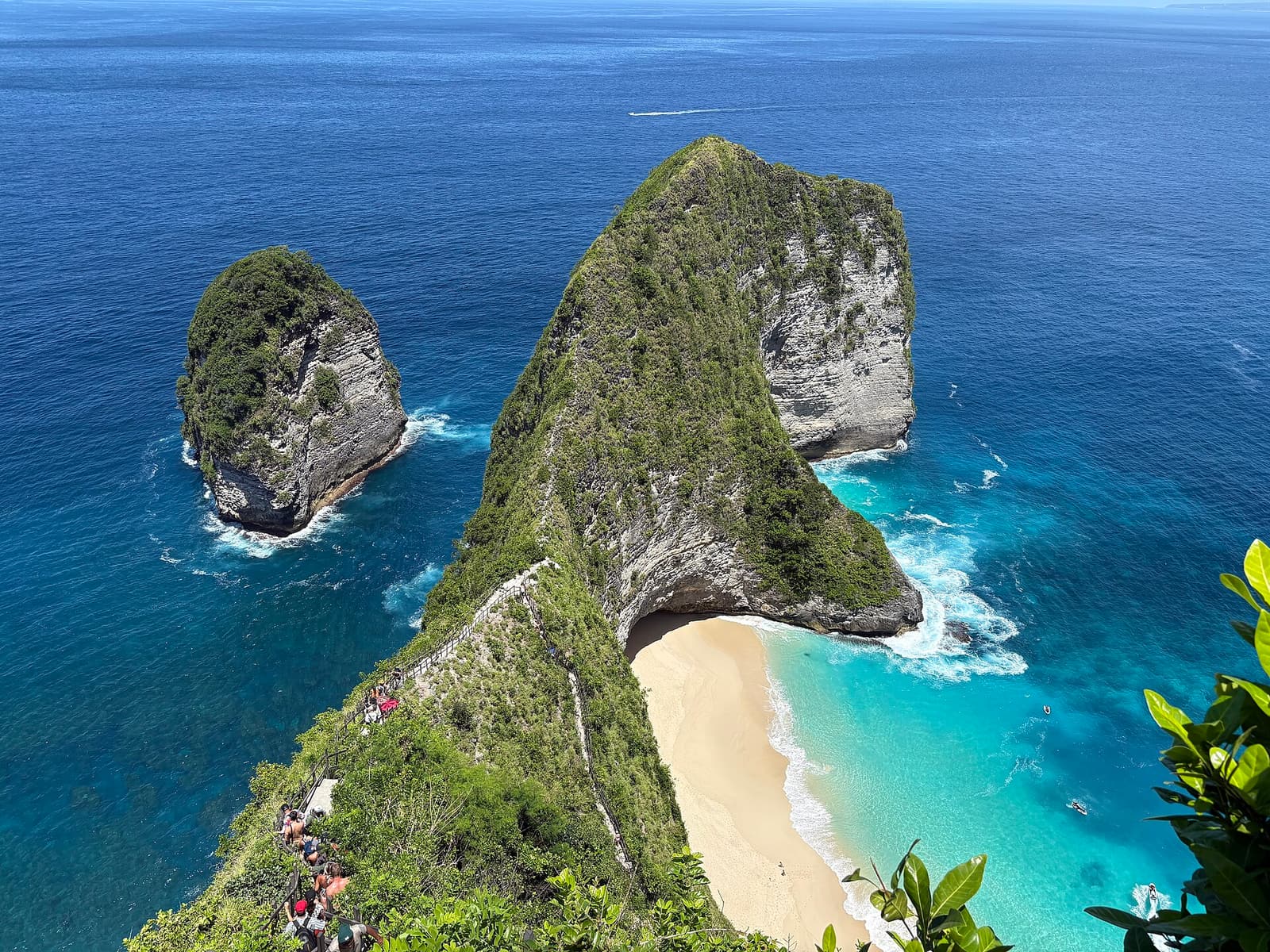
The T-Rex headland — Nusa Penida’s most famous view
A narrow, jungle-topped headland plunges into the sea on the south-west coast, its profile so like a Tyrannosaurus’s head that it is known as the T-Rex. Below lies a perfect crescent of white sand. The clifftop viewpoint is easy to reach; the path down to the beach is one of the steepest walks on the island.
 West coast
Broken Beach (Pasih Uug)
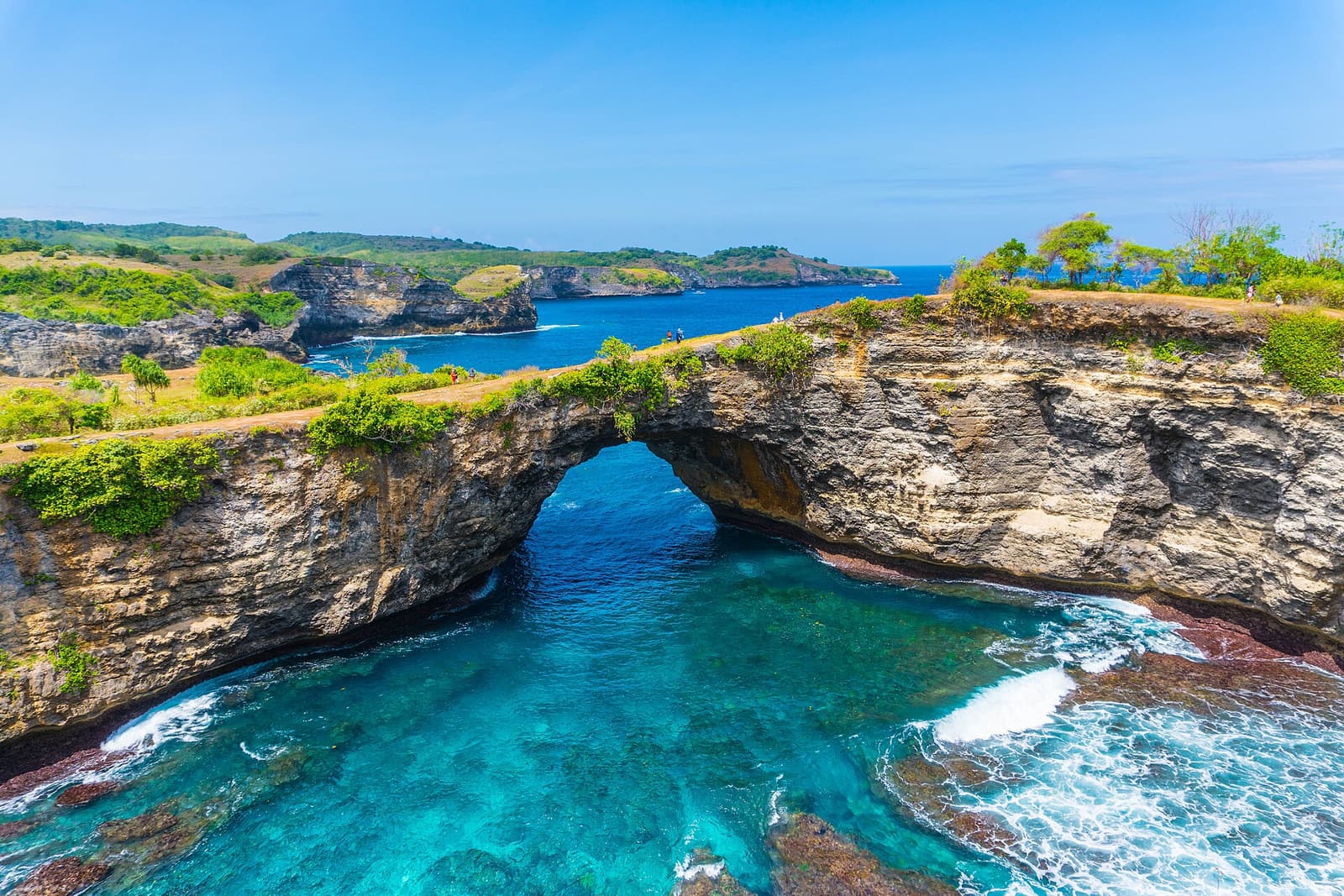
A sea-filled cove beneath a natural stone arch
Locally called Pasih Uug, “broken beach” is a near-circular cove enclosed by cliffs, open to the ocean through a great natural arch. A path runs all the way round the rim, giving views down into the turquoise water from every side — and sometimes of manta rays below.
 West coast
Angel’s Billabong
A clear rock pool on the edge of the ocean
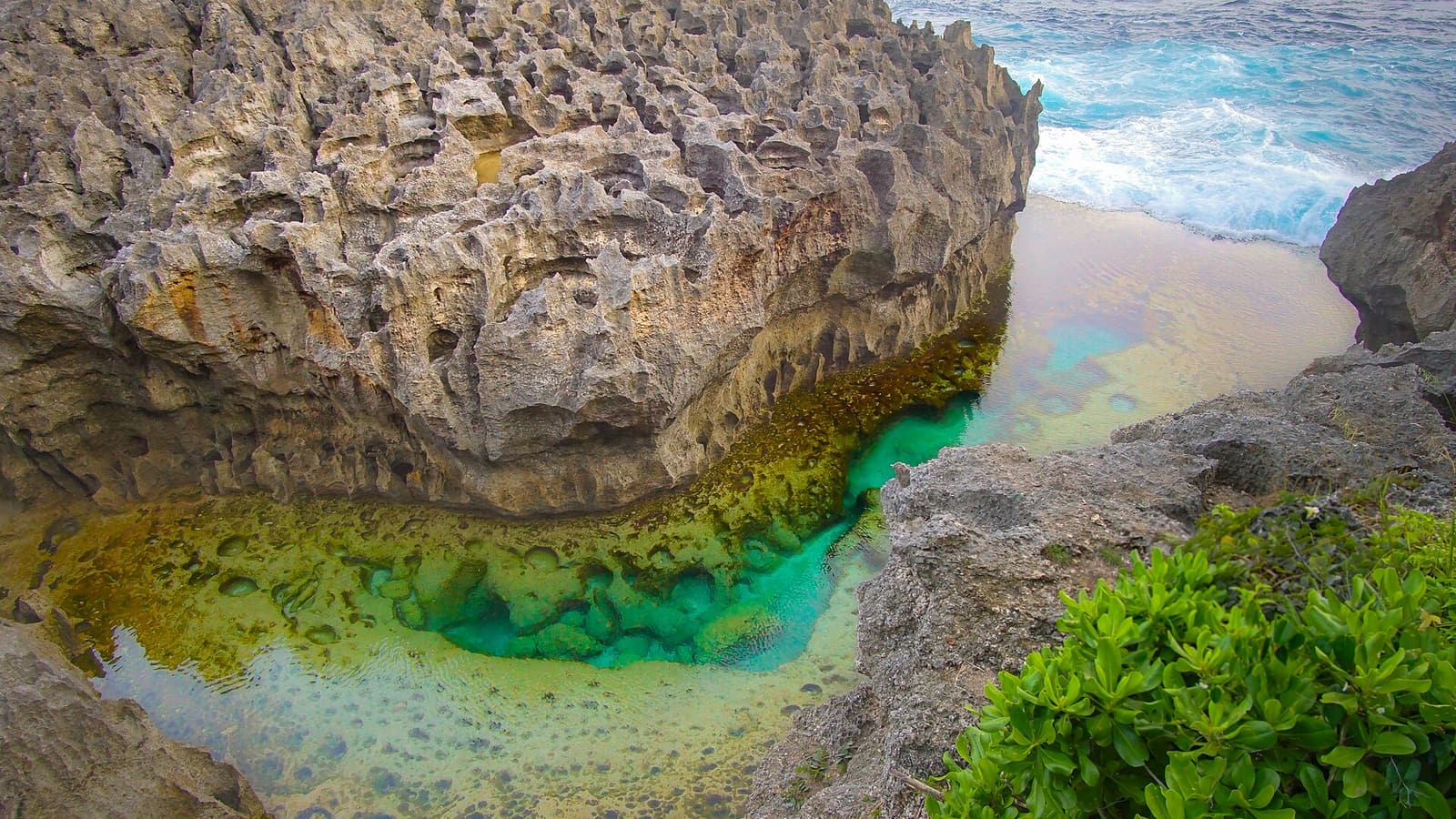
A few minutes’ walk from Broken Beach, a natural infinity pool sits in the rock shelf at the ocean’s edge, its water astonishingly clear and green at low tide. It is beautiful — and dangerous: waves can surge over the rocks without warning.
 West coast
Crystal Bay
The island’s favourite swimming beach and sunset spot
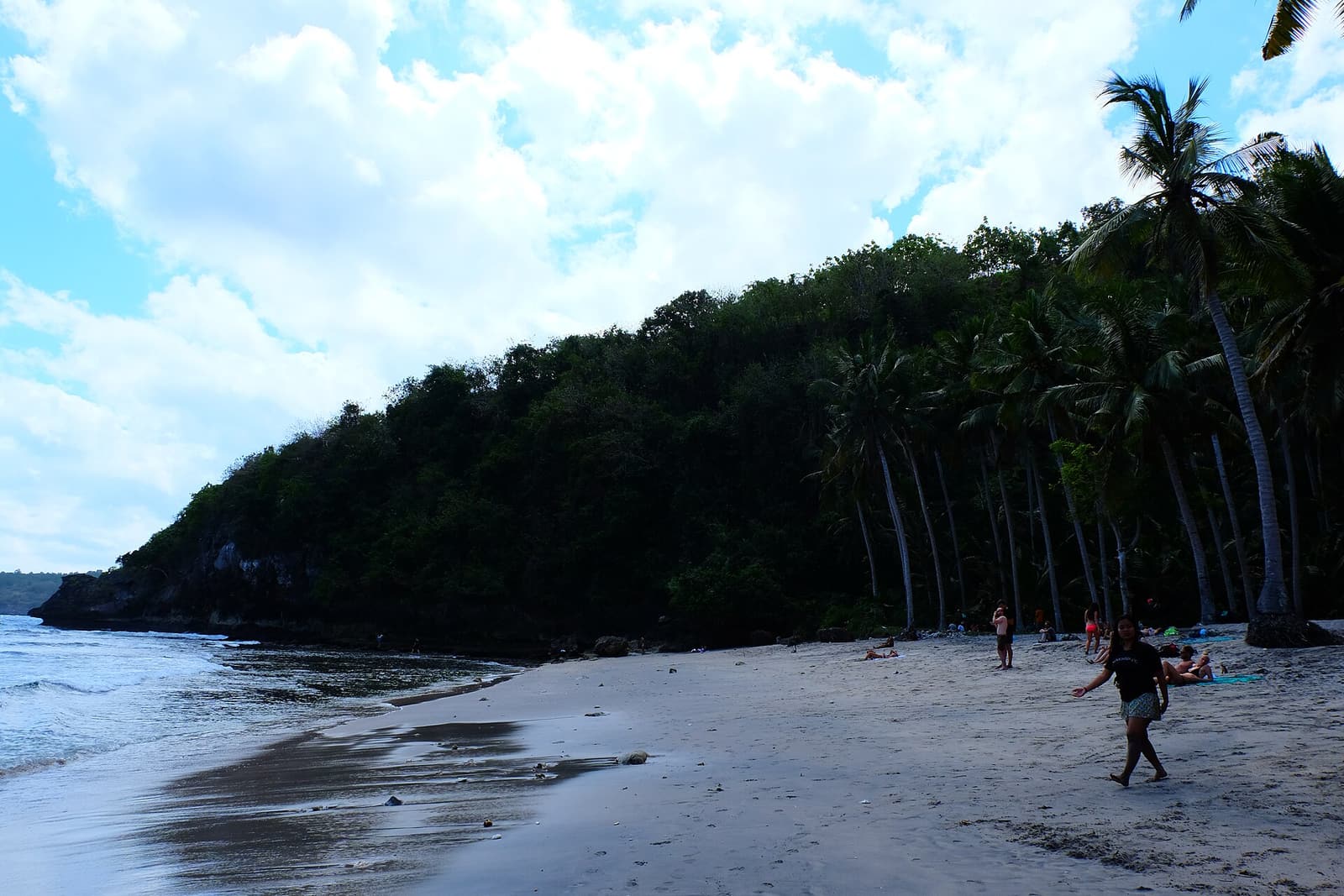
A sheltered bay on the west coast with a white-sand beach, palm trees, a small rocky islet and clear water over coral. It is a stop on many snorkel trips, a classic place to end a West tour with a swim, and the island’s best-known sunset beach.
Money
The currency is the Indonesian rupiah (IDR). There are ATMs in the main villages — Toyapakeh, Ped and Sampalan — but they can be empty or out of order, so bring enough cash from Bali. Larger hotels and some restaurants accept cards; warungs, parking attendants and small beach fees are cash only. Small notes are useful.
Phone and internet
Mobile coverage is good around the villages and patchy on parts of the south and east coasts. Buy a local SIM or eSIM in Bali before crossing. Most hotels have Wi-Fi, of varying speed.
Food and drink
Warungs serve Indonesian staples — nasi goreng, mie goreng, satay, grilled fish — and the tourist areas around Toyapakeh, Ped and Crystal Bay have cafés with smoothie bowls and Western dishes. Choices are more limited on the east coast; tours often include lunch. Drink bottled or filtered water, and refill where you can to cut plastic.
Temples and etiquette
Nusa Penida is Balinese Hindu. When visiting a temple, cover your shoulders and knees and wear a sarong and sash — usually available to borrow or rent at the entrance. Women who are menstruating are traditionally asked not to enter. Do not climb on shrines, and step around offerings (canang sari) on the ground. Ceremonies happen often; if a procession blocks the road, wait patiently. The cave temple of Goa Giri Putri is the most remarkable to visit.
Health and safety
The island has small clinics and a public health centre, but serious injuries are taken to Bali, so travel insurance that covers evacuation matters. The main risks are on the roads, on steep paths and in the sea — read our safety guide. Use strong sun protection, drink plenty of water and wear proper shoes on the cliff paths.
Wildlife and responsible travel
Nusa Penida and its neighbours sit within a marine protected area known for reef manta rays, turtles and, seasonally, the oceanic sunfish (mola mola). Keep your distance from marine life and never touch coral. On land, the island has been used as a refuge for rare birds including the critically endangered Bali starling, and long-tailed macaques live around some temples and cliffs — do not feed them. Use reef-safe sunscreen, carry your rubbish away from beaches, and respect closed paths and warning signs.
Sister islands
Nusa Lembongan, a short boat hop away, has more restaurants and nightlife and makes an easy base for Penida day trips — see our sister guide NusaLembongan.com. For Bali’s capital and the south, see Denpasar.com.