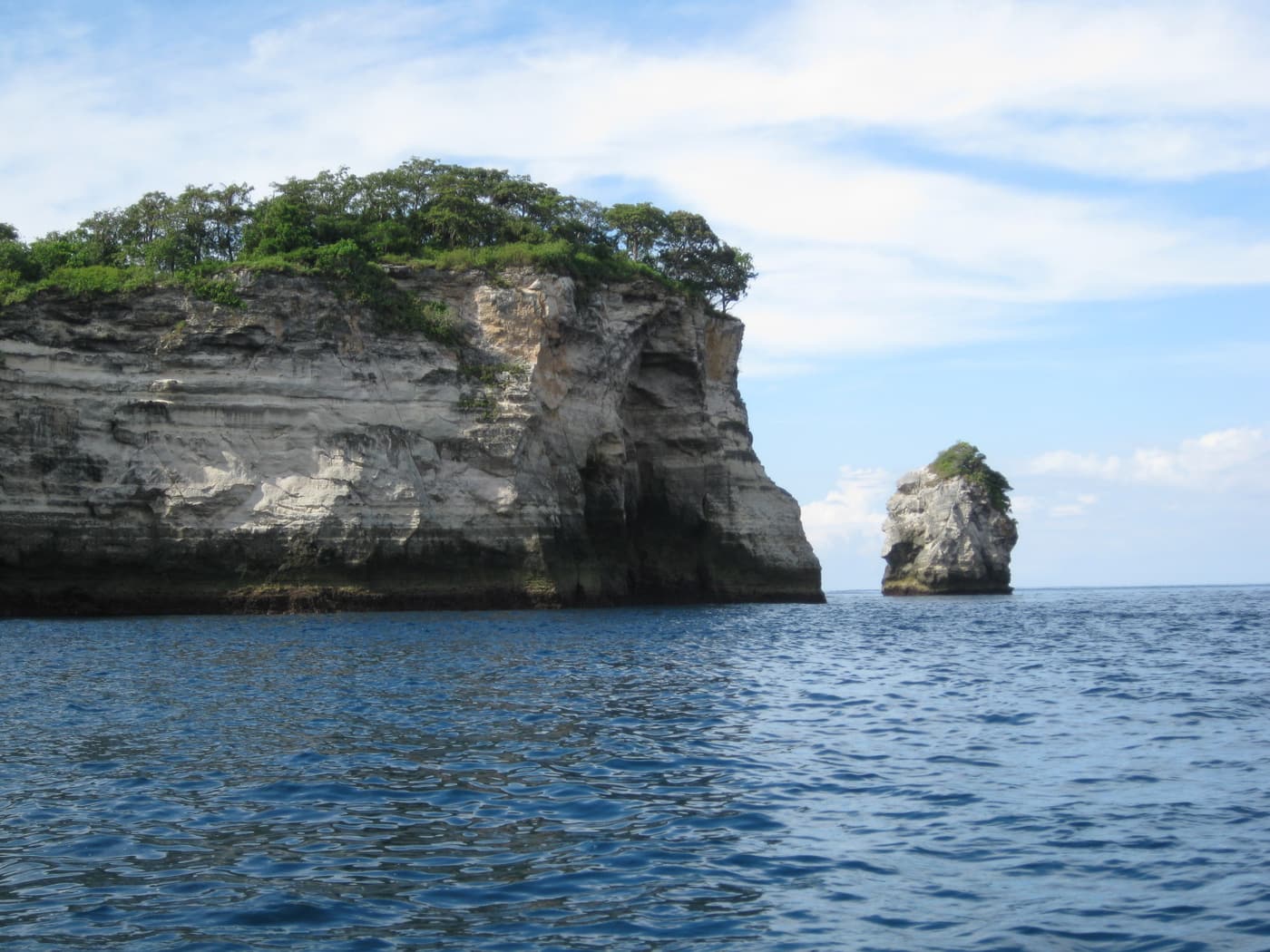
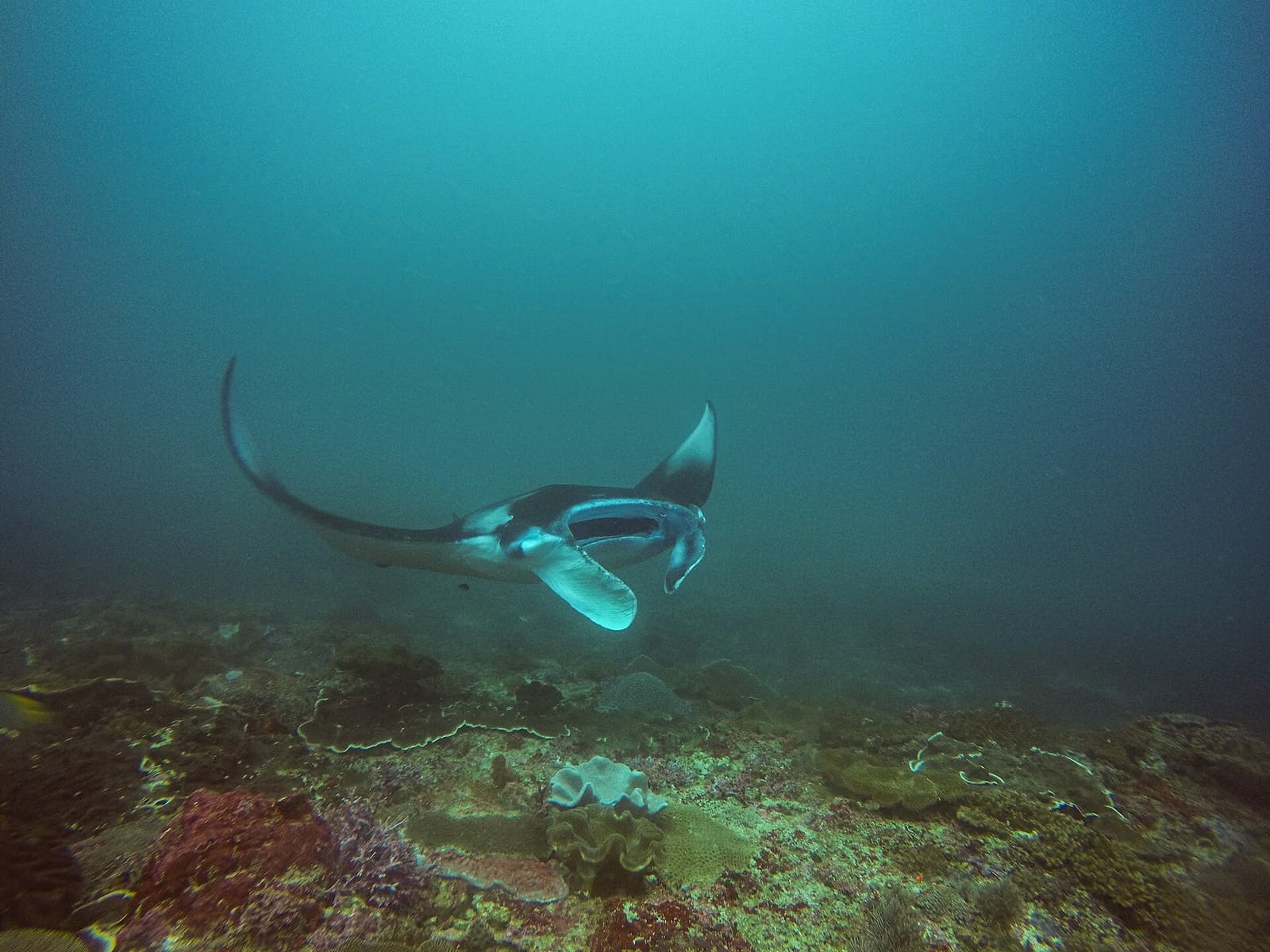
The waters around Nusa Penida are among the best places in Indonesia to see reef manta rays. These huge, gentle filter-feeders — often three metres or more across — gather at cleaning stations along the island’s coast, where small fish pick parasites from their skin. Snorkellers can watch them glide just below the surface.
The snorkel spots
- Manta Bay and Manta Point — the two manta sites visited by snorkel boats. Manta Bay is a bay used by most snorkel trips; Manta Point, off the island’s southern cliffs, is a cleaning station best known as a dive site, which snorkel boats also visit when the sea allows. Both can have a strong swell.
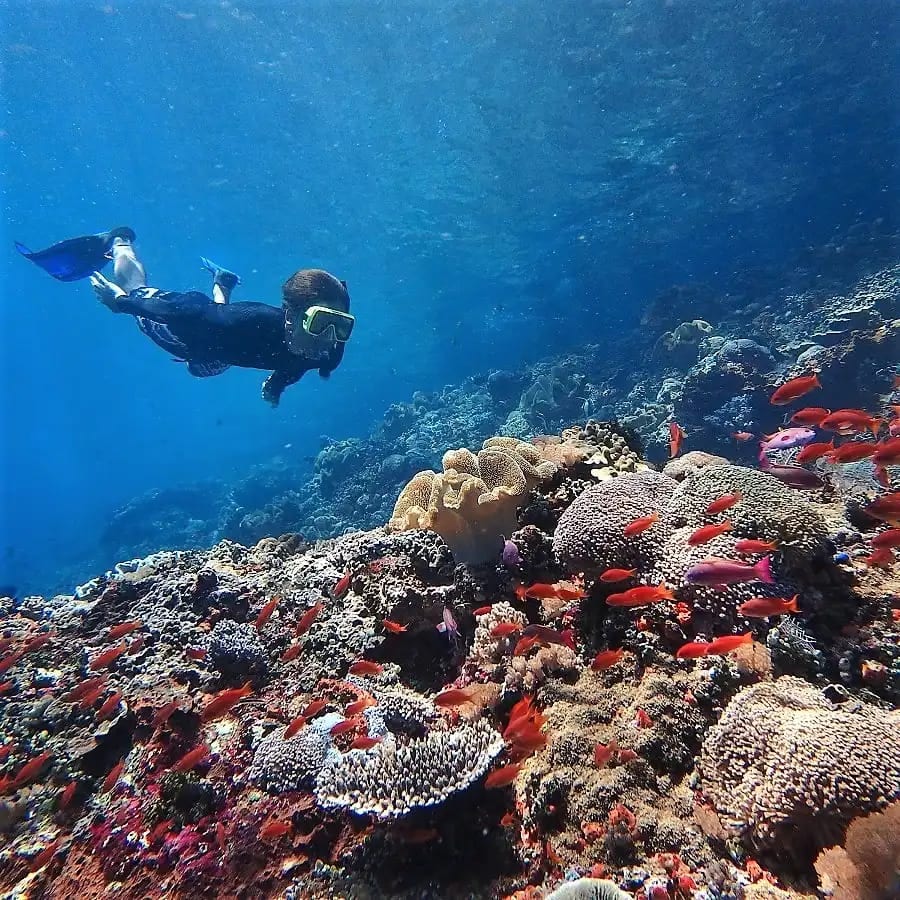
- Gamat Bay — a coral garden near Crystal Bay with clear water and many reef fish.
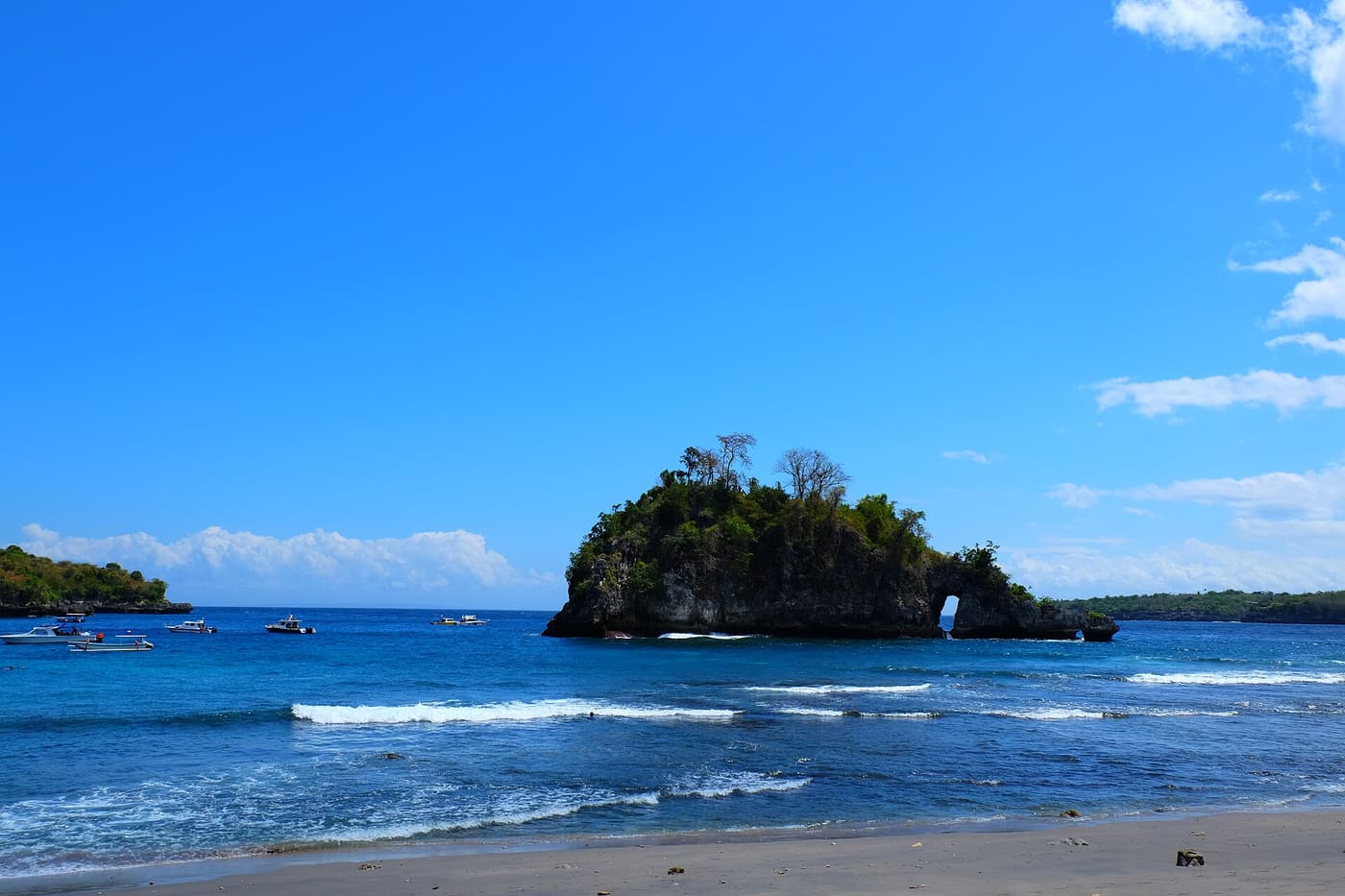
- Crystal Bay — a sheltered beach bay with coral close to shore; often the last stop of the morning.
- Toyapakeh — reefs along the channel between Penida and Lembongan, with turtles and fish; currents can be strong.
How a snorkel trip works
Most trips last two to four hours on the water and visit three or four spots, usually starting with the mantas in the morning. You snorkel from the boat with a mask, snorkel and life jacket provided; some trips include GoPro photos. Snorkel-only trips start from Nusa Penida or Nusa Lembongan; snorkel-and-land combinations from Bali add the fast boat and a West-coast land tour in the afternoon.
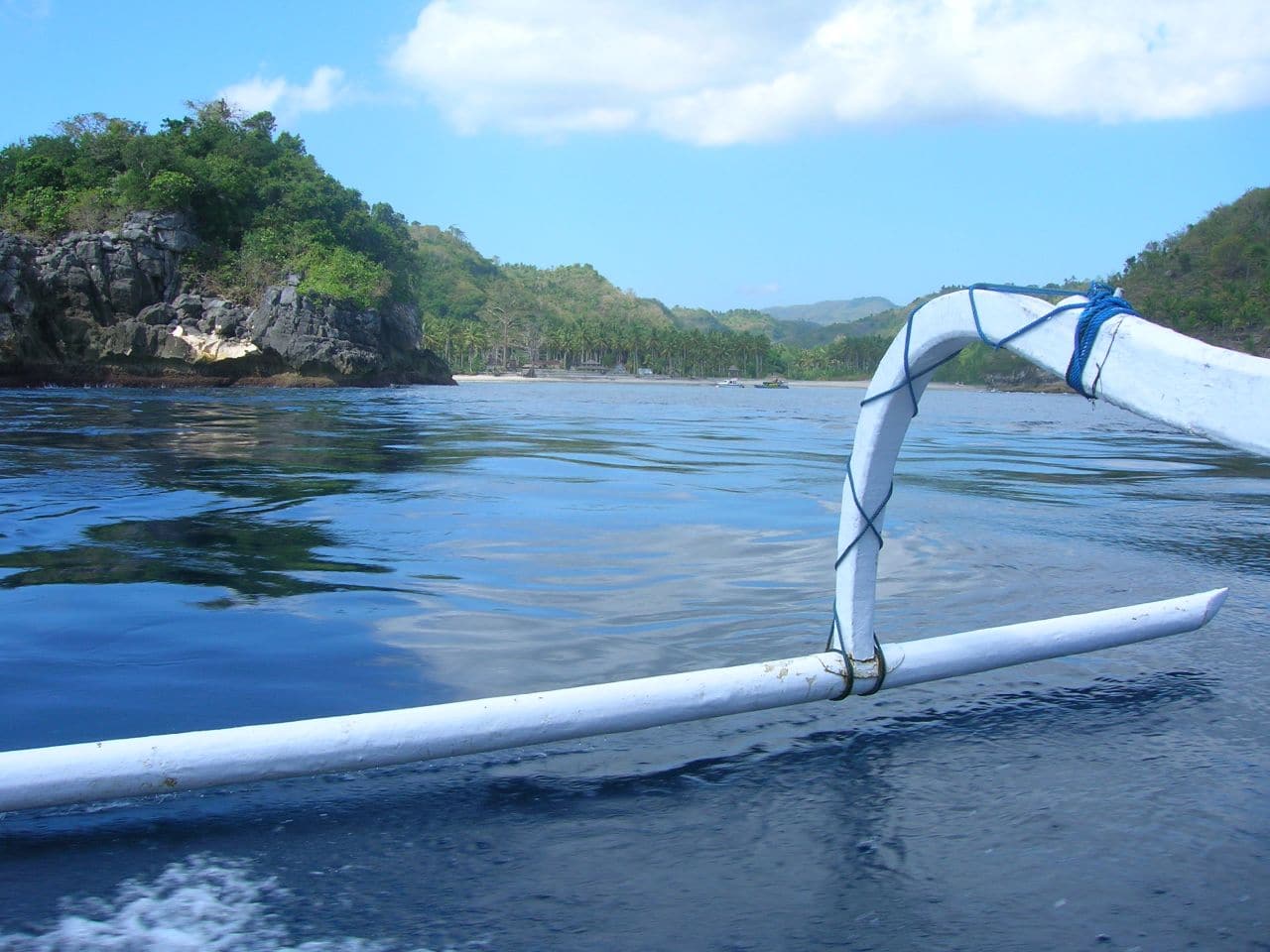 Snorkel + land from €16
Nusa Penida Snorkeling 3 Spots with GoPro & West Land Tour
A very popular combination of a snorkel boat in the morning and a West-coast land tour, with a boat-only option for those who just want to swim.
- Three snorkel spots with the chance of manta rays
- GoPro photos
- Optional Kelingking, Broken Beach and Angel’s Billabong
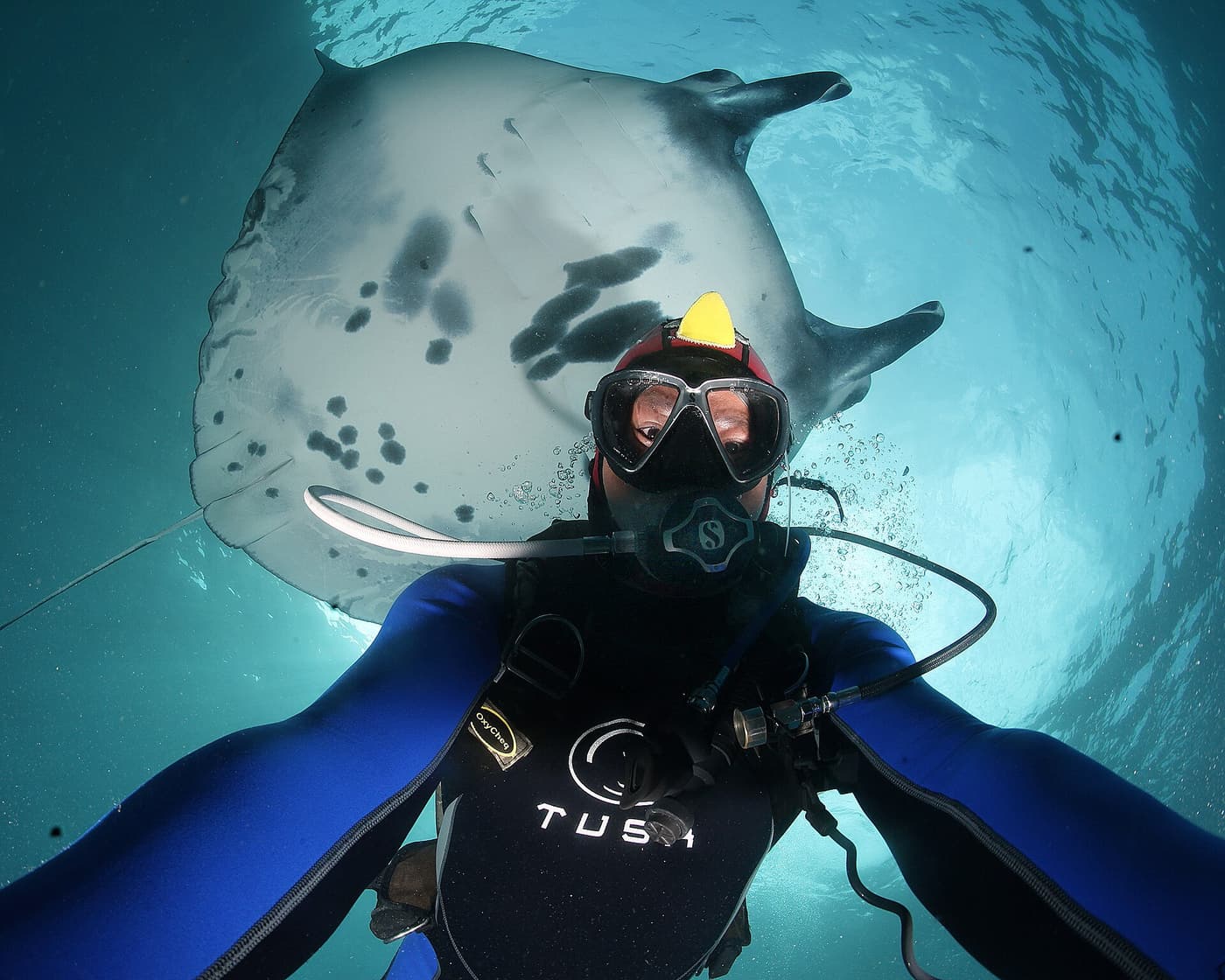 Private day trip from €89
Bali: Nusa Penida Private Snorkeling, Manta Rays & Land Tour
One of the highest-rated trips to the island: your own boat, manta snorkelling, a relaxed lunch and the Kelingking viewpoint.
- Exclusive boat from Sanur
- Snorkel at Manta Bay, Manta Point or Secret Bay
- Lunch with an infinity pool, then Kelingking
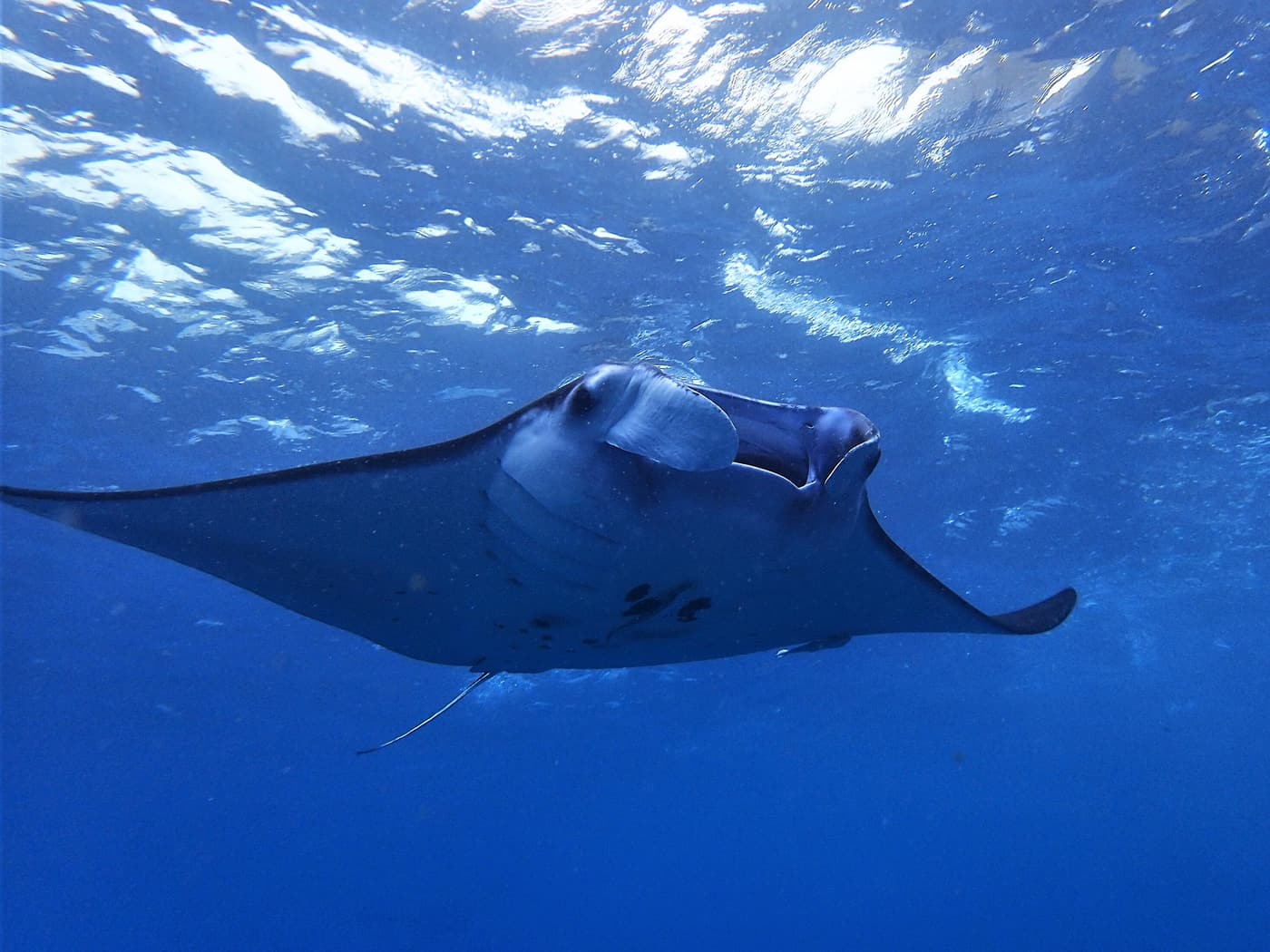 Premium boat from €81
Bali: Premium Yacht Nusa Penida Manta Snorkeling & Land Tour
A comfortable premium-boat day with manta snorkelling, the Kelingking viewpoint and time to relax at a beach club with views of Mount Agung.
- Cruise on a premium yacht
- Snorkel with manta rays
- Kelingking and a beach-club lunch with pool
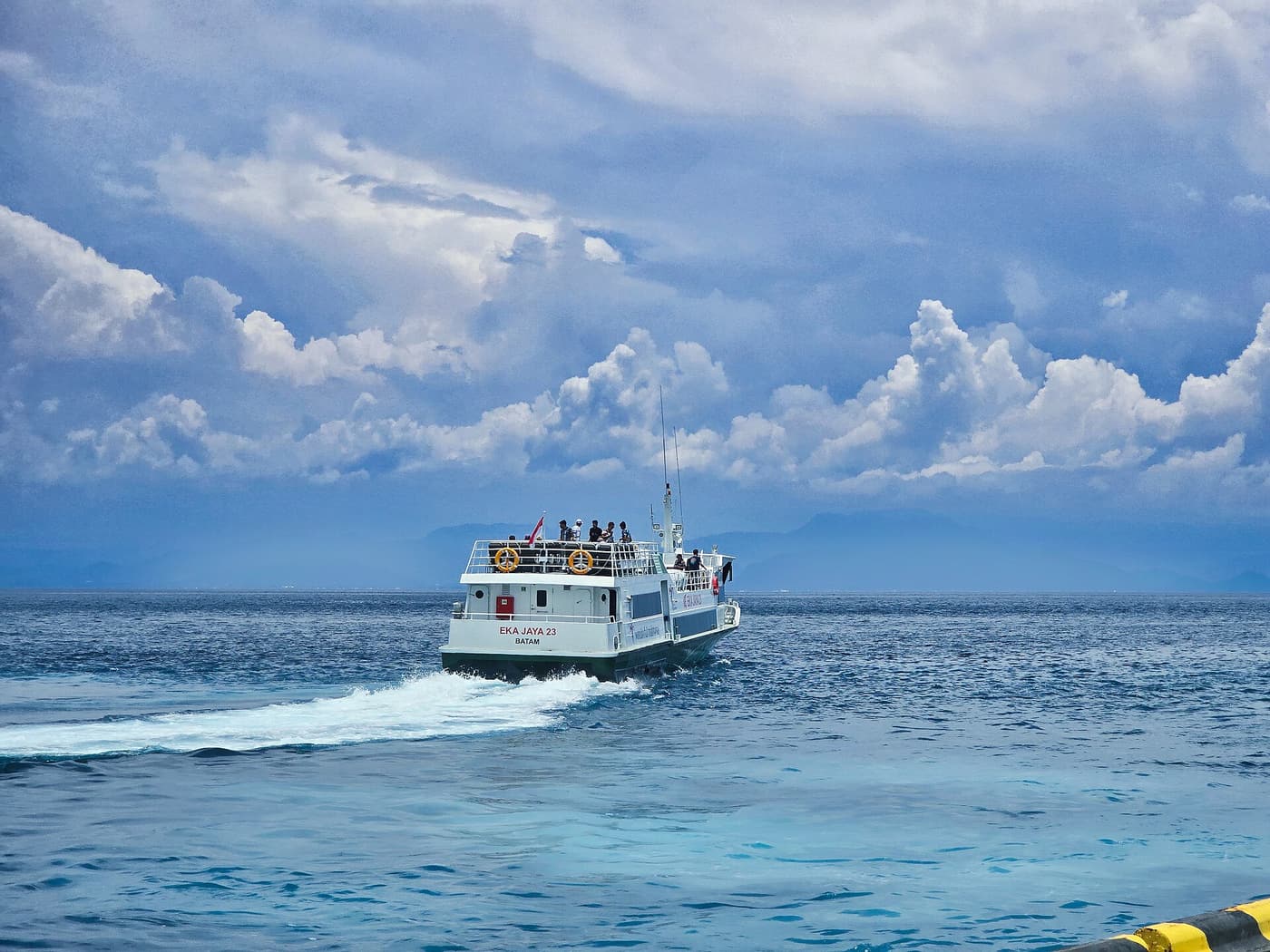 Premium boat from €91
Bali: Nusa Penida by Premium Yacht, Manta Rays, Land Tour
A large, experienced operator’s yacht day: snorkelling with mantas and a land stop at the Kelingking cliff, without a crowded public ferry.
- Manta rays and three snorkel spots
- Shuttle, lunch, gear and GoPro photos
- Refund if cancelled for bad weather
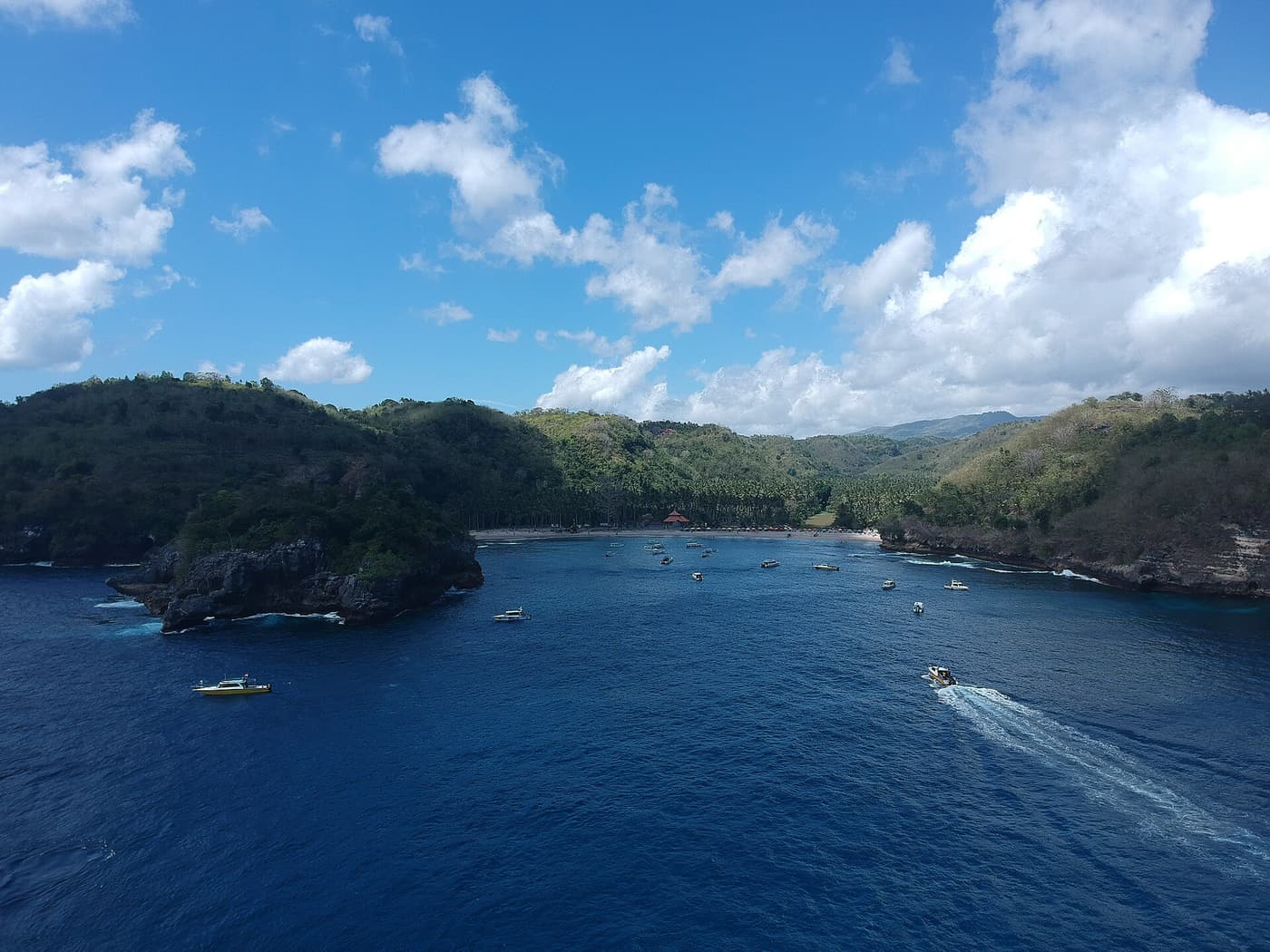 Snorkel + land from €39
From Bali: Nusa Penida 3-Spot Snorkeling & West Nusa Penida Tour
Snorkelling at three of the island’s best spots, then the West-coast cliffs — all as a day trip from Bali.
- Manta Bay, Gamat Bay and Crystal Bay
- Kelingking, Broken Beach and Angel’s Billabong
- Local guides
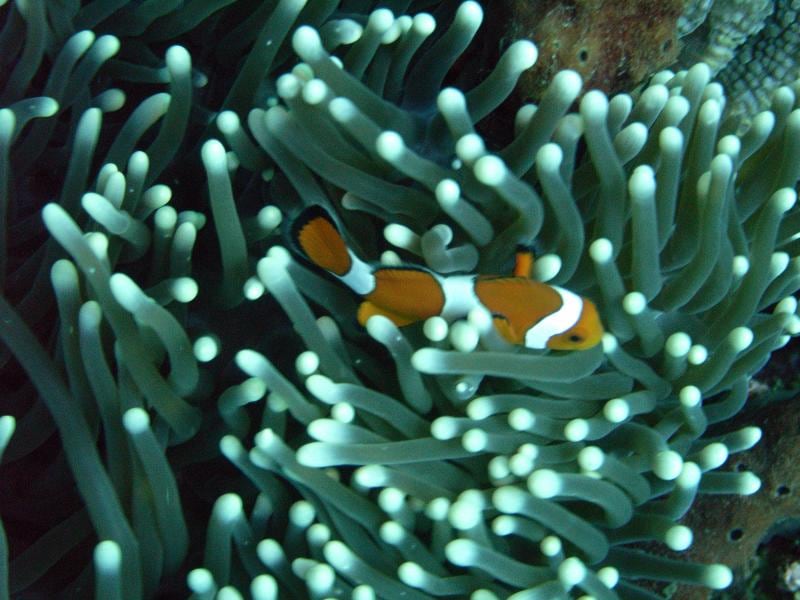 Snorkel from €19
From Lembongan: Nusa Penida Snorkeling Day Trip
A focused snorkelling trip to Nusa Penida’s manta sites and reefs from Lembongan, with many reviews.
- Manta Point or Manta Bay
- Three sea spots
- Lunch optional
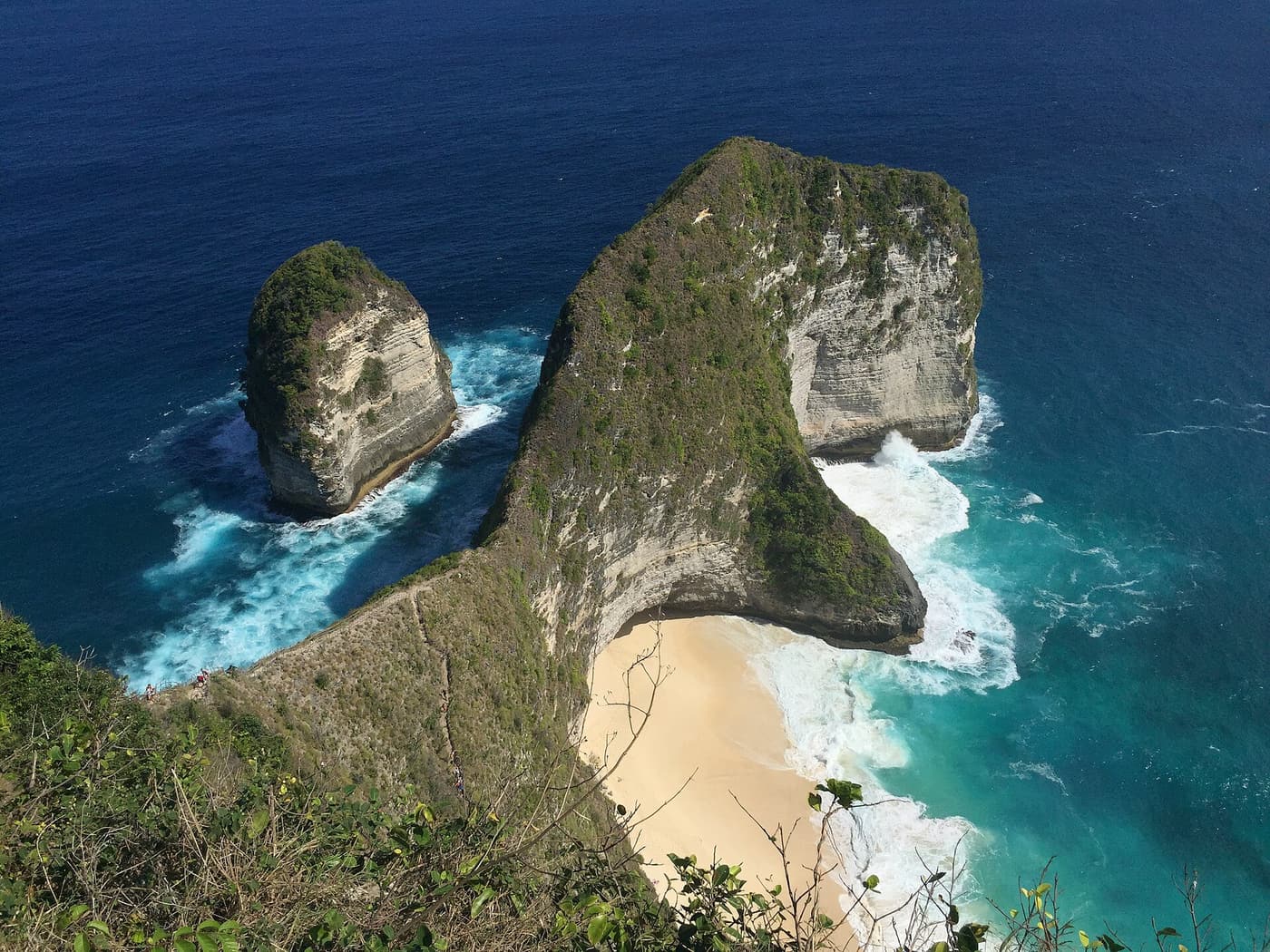 Snorkel + land from €65
From Lembongan: Manta Point Snorkeling & West Penida Tour
Manta snorkelling and coral reefs in the morning, the West-coast highlights in the afternoon, starting from Lembongan.
- Snorkel with manta rays
- Kelingking cliff and Broken Beach
- Angel’s Billabong
 Snorkel from €26
Lembongan: Manta Bay, Turtle Bay, & Gamat Bay Snorkeling
A short snorkelling trip to three spots off Nusa Penida, starting from Lembongan.
- Manta Bay
- Turtle Bay
- Gamat Bay coral
 Snorkel from €14
Nusa Penida: Snorkeling Adventure Package With Manta Fish
A short snorkelling trip for those staying on the island.
- Manta Bay and Crystal Bay
- Colourful fish and coral
- Pick-up available
 Snorkel from €14
Nusa Penida: Snorkeling Tour with Manta Rays and Turtles
A two-hour snorkelling trip with local guides, for those already on the island.
- Manta rays and turtles
- Coral reefs
- Local guides
 Diving from €220
Bali/Nusa Penida: 3 Fun Dives to Manta Point, Mola & Reef
Three guided dives at Nusa Penida’s best sites for certified divers, with pick-up.
- Manta Point and Crystal Bay
- Certified dive guides
- Hotel pick-up and lunch box
Conditions and safety
Manta sites are exposed to the open ocean. The swell can be big, the water can be choppy and currents can be strong — this is not a calm lagoon. Wear the life jacket if you are not a strong swimmer, stay with your guide, and tell the crew if you feel unwell. Captains switch or skip sites when conditions are unsafe; that is a good sign, not a bad one. Sightings are frequent but never guaranteed.
Manta etiquette
- Keep a distance of several metres and never touch, chase or block a manta’s path.
- Stay at the surface — do not dive down on top of them.
- No flash photography underwater.
- Use reef-safe sunscreen, or better, a rash vest.
- Choose operators that brief guests on these rules and limit time at the site.
Diving and the mola mola
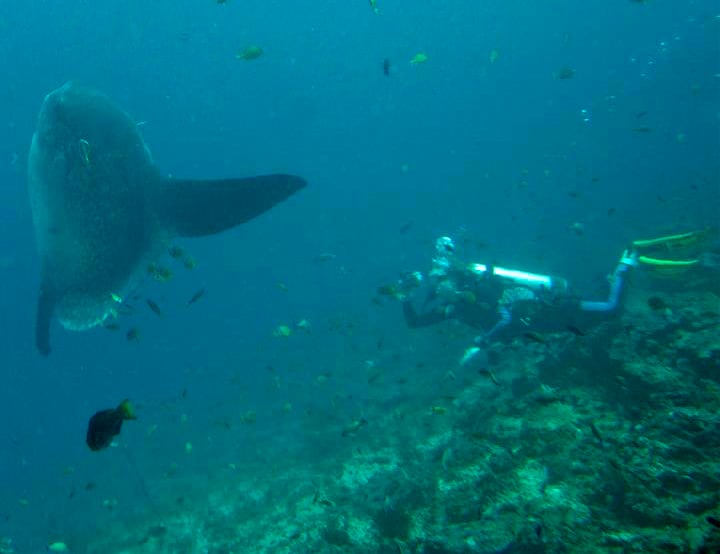
For certified divers, Nusa Penida is famous for drift dives along its walls, for Manta Point and for the oceanic sunfish (mola mola), which visits cleaning stations around Crystal Bay and the south coast mainly between about July and October. Currents can be strong and the water can be unexpectedly cold, so these dives suit experienced divers with a reputable centre. Dive centres are based in Toyapakeh, Ped and on Nusa Lembongan.
What to bring
Swimwear, a towel, a rash vest or light wetsuit top, reef-safe sunscreen, a dry bag, seasickness tablets if needed, and a waterproof camera if you have one. Most trips provide masks, snorkels, fins and life jackets.